


 Deutsch
 Tiếng Việt
 日本語
日本語 한국어
한국어 ไทย
ไทย Português
 العربية
 Français
 Español
 Italiano
 Nederlands
 Svenska
 Norsk
Norsk Dansk
Dansk Polski
 Русский
 Türkçe
 Bahasa Indonesia
 Bahasa Melayu
High-Resolution Audio in Your Car: The Ultimate Guide to HD Music on the Road
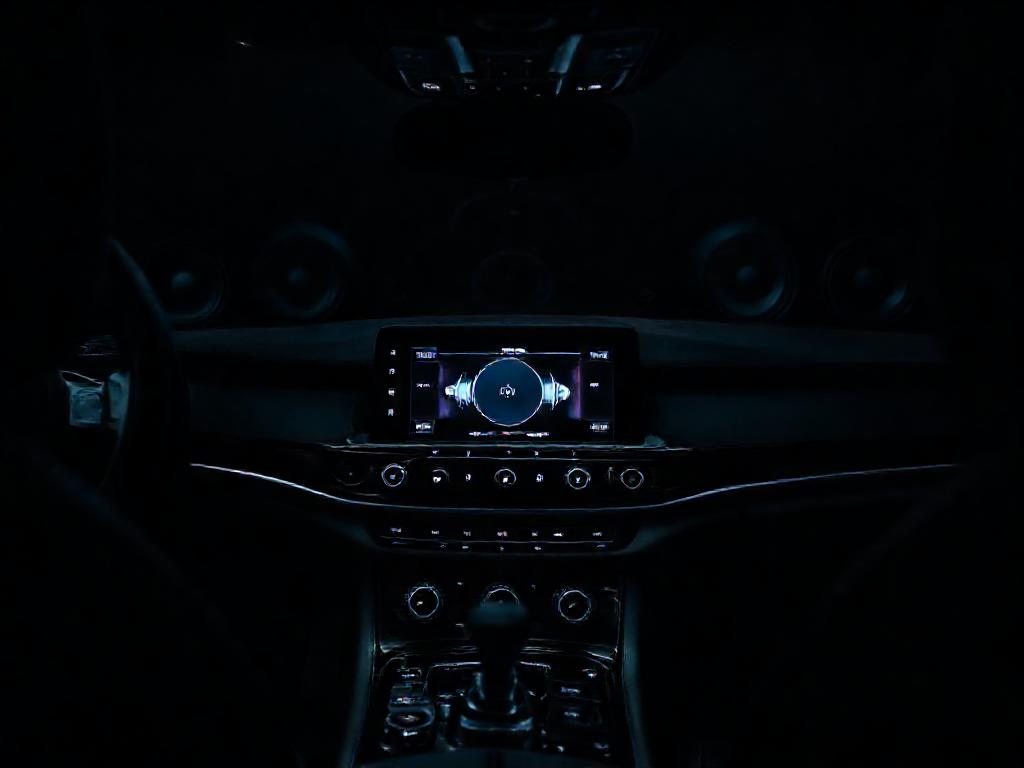
If you're passionate about music, a high-resolution audio car system can revolutionize your driving experience. Unlike standard audio setups, a high-resolution audio car delivers studio-quality sound with unparalleled clarity and depth. Whether you're an audiophile or simply love great sound, upgrading to a high-resolution audio car system is a game-changer.
Understanding High-Resolution Audio in the Car
High-resolution audio (HRA) represents the next evolution in automotive sound quality, delivering studio-grade fidelity that surpasses standard CD quality. When we talk about high resolution audio car systems, we're referring to music files with higher sampling rates (96kHz or 192kHz) and greater bit depths (24-bit or 32-bit) than conventional formats. These enhanced specifications capture more musical detail, wider dynamic range, and extended frequency response that brings you closer to the original recording.
In the automotive environment, where road noise and cabin acoustics present unique challenges, HRA becomes particularly valuable. The additional resolution helps preserve subtle musical nuances that would otherwise be lost in a typical car audio system. Whether it's the delicate pluck of an acoustic guitar string or the breath between a vocalist's words, high-resolution audio reveals details that standard MP3 files simply can't reproduce.
Key Benefits of High-Resolution Audio in Vehicles
- Enhanced clarity: Higher bit depth reduces quantization noise, revealing subtle details in recordings
- Wider frequency response: Extended highs capture harmonics that add realism to instruments
- Greater dynamic range: 24-bit audio provides 144dB of dynamic range versus 96dB for 16-bit
- Improved spatial imaging: Better channel separation creates a more immersive soundstage
- Reduced compression artifacts: Lossless formats preserve the original recording quality
The Role of DSP in High-Resolution Car Audio
Digital Signal Processing (DSP) serves as the critical bridge between high-resolution audio files and your car's speakers. Without proper DSP implementation, even the best HRA files won't reach their full potential in the automotive environment. A well-tuned DSP system compensates for the unique acoustic challenges of vehicle interiors, including reflective surfaces, road noise, and irregular speaker placement.
Modern car audio DSP units offer sophisticated features specifically designed for high-resolution playback. These include time alignment to synchronize sound arrival at your ears, parametric equalization for precise frequency adjustment, and crossover networks that protect tweeters from damaging low frequencies. When properly configured, DSP transforms your car into a moving concert hall where every note sounds intentional and balanced.
Essential DSP Features for High-Resolution Audio
- Time alignment: Compensates for varying distances between speakers and listening position
- Parametric EQ: Allows precise adjustment of specific frequency bands
- Crossover networks: Protects speakers and optimizes frequency distribution
- Phase correction: Aligns waveforms for accurate stereo imaging
- Dynamic range compression: Manages volume differences between quiet and loud passages
- Sample rate conversion: Ensures compatibility with different audio sources
Building a High-Resolution Car Audio System
Creating a true high resolution audio car system requires careful component selection and integration. The signal path from source to speaker must maintain the highest possible fidelity at every stage. This means choosing components that can handle the increased data rates and wider frequency ranges of high-resolution files without introducing distortion or noise.
Start with a high-quality head unit or digital media player capable of decoding lossless formats like FLAC, ALAC, or WAV at 24-bit/96kHz or higher. The amplifier should offer sufficient power and low distortion characteristics to accurately reproduce the extended dynamic range. Speakers must be capable of handling the full frequency spectrum without compression or breakup at high volumes.
Critical Components for High-Resolution Playback
- Source unit: Must support lossless formats and high bit/sampling rates
- Digital-to-analog converter (DAC): Converts digital signals to analog with minimal degradation
- Amplifiers: Should provide clean power with low THD (total harmonic distortion)
- Speakers: Full-range drivers capable of extended frequency response
- Cabling: High-quality interconnects to preserve signal integrity
- Sound deadening: Reduces road noise and improves acoustic environment
Tuning Your System for High-Resolution Audio
Proper tuning is essential to realize the full potential of your high resolution audio car system. The automotive environment presents unique acoustic challenges that require specialized tuning approaches. Unlike home audio systems, car interiors have reflective surfaces, irregular shapes, and constant background noise that must be accounted for in the tuning process.
Begin by measuring your system's frequency response at the listening position using a calibrated microphone and measurement software. This reveals peaks and dips in the response that need correction. Time alignment comes next, adjusting the delay of each speaker so sound arrives at your ears simultaneously. Finally, apply parametric equalization to smooth out frequency response and address any remaining acoustic issues.
Step-by-Step Tuning Process
- Initial setup: Install all components and verify proper functionality
- Acoustic measurement: Use a calibrated microphone to capture frequency response
- Time alignment: Adjust speaker delays for proper sound arrival timing
- Crossover configuration: Set appropriate crossover points for each driver
- Equalization: Apply parametric EQ to smooth frequency response
- Phase adjustment: Fine-tune phase relationships between drivers
- Volume balancing: Set relative levels between all channels
- Final verification: Listen critically and make minor adjustments as needed
High-Resolution Audio Formats and Sources
Not all high-resolution audio files are created equal. Understanding the different formats and their characteristics helps you choose the best sources for your high resolution audio car system. Lossless formats preserve all the original recording data, while lossy formats sacrifice some quality for smaller file sizes. For the best possible sound, stick with lossless formats whenever possible.
Popular high-resolution audio formats include FLAC (Free Lossless Audio Codec), ALAC (Apple Lossless Audio Codec), WAV, and AIFF. These formats support 24-bit depth and sampling rates up to 192kHz. When selecting music sources, look for services that offer true high-resolution downloads rather than upsampled standard-definition files. Some streaming services now offer high-resolution tiers, though these typically require a premium subscription.
High-Resolution Audio Format Comparison
| Format | Lossless | Max Bit Depth | Max Sample Rate | File Size |
|---|---|---|---|---|
| FLAC | Yes | 32-bit | 655kHz | Medium |
| ALAC | Yes | 32-bit | 384kHz | Medium |
| WAV | Yes | 32-bit | 192kHz | Large |
| AIFF | Yes | 32-bit | 192kHz | Large |
| DSD | Yes | 1-bit | 2.8MHz/5.6MHz | Very Large |
Premium Solutions for High-Resolution Car Audio
For enthusiasts seeking the ultimate high resolution audio car experience, premium solutions offer advanced features and superior build quality. These systems typically include high-end digital signal processors with extensive tuning capabilities, specialized amplifiers designed for low distortion, and speaker systems engineered for extended frequency response. The attention to detail in these components ensures that every aspect of the high-resolution signal is preserved from source to speaker.
When evaluating premium options, look for systems with high-quality digital-to-analog converters that can handle the increased data rates of high-resolution files. Amplifiers should offer sufficient power reserves and low noise floors to accurately reproduce the extended dynamic range. For the most discerning listeners, some manufacturers offer complete system solutions that include matched components designed to work together seamlessly.
Brands like Alchimist offer comprehensive solutions for high-resolution car audio, with components engineered to maintain signal integrity throughout the entire audio chain. Their product line includes advanced DSP processors with extensive tuning capabilities, high-current amplifiers designed for low distortion, and speaker systems capable of reproducing the full frequency spectrum with accuracy. For those seeking the ultimate in automotive high-resolution playback, these premium solutions provide the tools needed to create a truly exceptional listening experience.
Maintaining Your High-Resolution Car Audio System
- Regular cleaning: Keep connectors and terminals free from corrosion
- Software updates: Maintain current firmware for digital components
- Periodic tuning: Recheck system tuning after major climate changes
- Component inspection: Check for signs of wear or damage regularly
- Source quality: Verify high-resolution files aren't being downsampled
- Environment control: Maintain consistent temperature and humidity
Ready to upgrade your car's audio system? Explore our premium high-resolution audio car components or read our step-by-step setup guide for expert tips and recommendations.