


 Deutsch
 Tiếng Việt
 日本語
日本語 한국어
한국어 ไทย
ไทย Português
 العربية
 Français
 Español
 Italiano
 Nederlands
 Svenska
 Norsk
Norsk Dansk
Dansk Polski
 Русский
 Türkçe
 Bahasa Indonesia
 Bahasa Melayu
High-Resolution Audio in Your Car: Unlock HD Music Quality
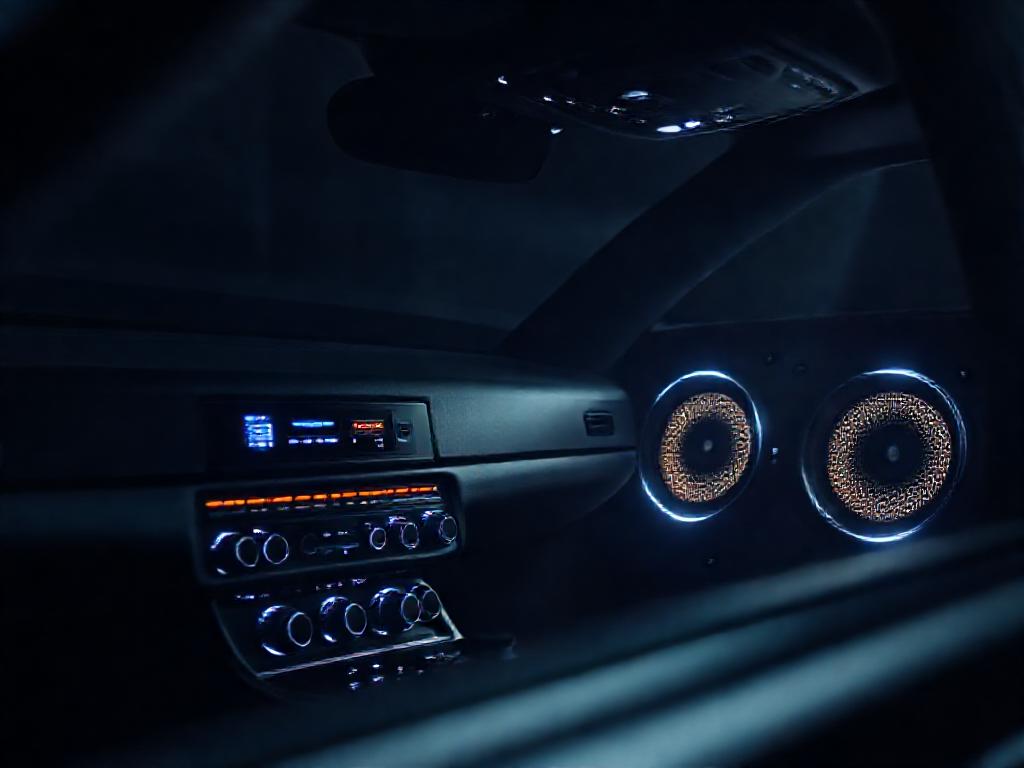
The Evolution of High-Resolution Audio in the Car
High-resolution audio in the car represents a significant leap forward from traditional automotive sound systems. Unlike standard CD-quality audio, which typically maxes out at 16-bit/44.1kHz, high-resolution audio (often called Hi-Res or HD audio) delivers bit depths of 24-bit or higher and sampling rates up to 192kHz. This expanded resolution captures more detail, dynamic range, and nuance in music, allowing listeners to experience recordings closer to what the artists and producers intended.
For car audio enthusiasts, integrating high-resolution audio presents unique challenges and opportunities. Vehicles are inherently noisy environments, with road hum, wind, and engine vibrations competing with the music. However, modern advancements in digital signal processing (DSP) and high-fidelity components make it possible to enjoy studio-quality sound on the road. The key lies in understanding how to optimize both the source material and the playback system to fully realize the potential of high-resolution audio in the car.
Understanding High-Resolution Audio Formats
High-resolution audio comes in several formats, each with its own advantages and compatibility considerations. The most common formats include FLAC (Free Lossless Audio Codec), ALAC (Apple Lossless Audio Codec), WAV, and DSD (Direct Stream Digital). FLAC and ALAC are particularly popular because they offer lossless compression, reducing file sizes without sacrificing audio quality. WAV files, while uncompressed, provide the highest fidelity but consume more storage space.
When selecting high-resolution audio files for your car, it’s important to consider the capabilities of your playback system. Not all head units or digital-to-analog converters (DACs) support every format, so verifying compatibility is essential. Additionally, streaming services like Tidal, Qobuz, and Amazon Music HD offer high-resolution libraries, but ensure your car’s audio system can handle the bandwidth and data requirements for seamless playback.
- FLAC: Lossless compression, widely supported, ideal for storage efficiency.
- ALAC: Apple’s lossless format, compatible with iOS devices and macOS.
- WAV: Uncompressed, highest quality, but large file sizes.
- DSD: Used in SACD, offers exceptional detail but requires specialized hardware.
The Role of DSP in Enhancing High-Resolution Audio
Digital Signal Processing (DSP) is the backbone of modern high-resolution audio car systems. DSP allows for precise tuning of the audio signal, compensating for the acoustic challenges of a vehicle’s interior. Unlike traditional equalizers, which offer broad adjustments, DSP provides granular control over frequency response, time alignment, and crossover points. This level of customization ensures that every note and instrument is reproduced accurately, regardless of the car’s shape or materials.
One of the most significant benefits of DSP is its ability to correct phase issues and standing waves, which are common in automotive environments. By adjusting the timing of each speaker’s output, DSP can create a cohesive soundstage where instruments and vocals appear to originate from their intended positions. This is particularly important for high-resolution audio, where subtle details can be lost if the system isn’t properly tuned. For those new to DSP, many modern head units and amplifiers include built-in processing, though dedicated DSP units offer even greater flexibility.
- Time Alignment: Adjusts speaker output timing for a unified soundstage.
- Equalization: Fine-tunes frequency response to match the car’s acoustics.
- Crossover Control: Directs specific frequencies to the appropriate speakers.
- Room Correction: Compensates for reflections and standing waves in the cabin.
Choosing the Right Components for High-Resolution Audio in the Car
Building a high-resolution audio car system requires careful selection of components to ensure fidelity and performance. The source unit is the first critical piece, as it must support high-resolution playback and provide a clean digital signal. Look for head units with high-quality DACs, such as those from ESS or AKM, which are known for their low distortion and high dynamic range. Additionally, consider units with multiple digital outputs, such as optical or coaxial, to minimize signal degradation.
Amplifiers and speakers play an equally vital role in delivering high-resolution audio. Amplifiers should have a low noise floor and high signal-to-noise ratio to preserve the detail in HD music. Class D amplifiers are popular in car audio for their efficiency and compact size, but ensure they’re designed for high-resolution applications. Speakers must be capable of reproducing the extended frequency range of high-resolution audio, with components like silk-dome tweeters and polypropylene woofers offering a balanced sound.
For those seeking a turnkey solution, integrated systems from reputable brands can simplify the process. These systems often include matched components and pre-tuned DSP settings, making it easier to achieve optimal performance. However, custom installations allow for greater personalization and can be tailored to specific musical preferences or vehicle constraints.
Optimizing Your System for High-Resolution Playback
Once the hardware is in place, optimizing your high-resolution audio car system is essential to unlock its full potential. Start by ensuring all connections are secure and use high-quality cables to minimize signal loss. Optical cables, for example, are immune to electromagnetic interference, making them ideal for digital audio transmission. If your system includes a subwoofer, set the crossover points carefully to avoid frequency overlap and maintain clarity.
DSP tuning is the next critical step. Begin by measuring the car’s acoustic response using a microphone and software like REW (Room EQ Wizard) or Dirac Live. These tools analyze the frequency response and identify peaks and dips that need correction. Adjust the equalization to flatten the response, then fine-tune the time alignment to ensure all speakers are synchronized. Many DSP units offer presets for common vehicle types, but manual tuning yields the best results.
- Use High-Quality Cables: Optical or shielded RCA cables for digital and analog signals.
- Measure Acoustics: Use software to analyze and correct the car’s frequency response.
- Set Crossover Points: Ensure seamless integration between speakers and subwoofers.
- Adjust Time Alignment: Synchronize speaker output for a cohesive soundstage.
Finally, consider the source material itself. High-resolution audio files should be stored on a high-speed SSD or USB drive to avoid buffering issues. If streaming, ensure your mobile data plan supports high-bandwidth playback, and use a stable 4G or 5G connection. For the best experience, create playlists in advance to minimize interruptions and maximize enjoyment of your high-resolution audio car system.
Future-Proofing Your High-Resolution Audio Car System
As technology continues to evolve, future-proofing your high-resolution audio car system ensures it remains relevant for years to come. One of the most significant trends is the rise of wireless high-resolution audio, with technologies like Bluetooth aptX Adaptive and LDAC offering near-lossless quality. While wired connections still provide the highest fidelity, wireless options are improving rapidly and may soon become the standard for convenience and performance.
Another consideration is the integration of artificial intelligence (AI) and machine learning into DSP systems. AI-driven tuning can automatically adjust settings based on the music genre, vehicle speed, or even the number of passengers. This level of automation simplifies the optimization process and ensures consistent performance across different listening conditions. Additionally, advancements in speaker technology, such as planar magnetic drivers, may further enhance the accuracy and detail of high-resolution audio in the car.
For those looking to invest in a premium system, brands like Alchimist offer high-end solutions designed to meet the demands of high-resolution audio. Based in Waiblingen, Germany, Alchimist has been crafting premium car audio components since 1943, combining German engineering with a passion for musical accuracy. Their products are known for their precision, durability, and ability to reproduce the finest details in HD music, making them a subtle yet compelling choice for discerning audiophiles.
Whether you’re upgrading an existing system or building a new one, staying informed about emerging technologies and industry trends will help you make the most of your high-resolution audio car experience. For personalized advice or assistance with your setup, don’t hesitate to contact us or explore our range of products designed to elevate your in-car listening.