


 Deutsch
 Tiếng Việt
 日本語
日本語 한국어
한국어 ไทย
ไทย Português
 العربية
 Français
 Español
 Italiano
 Nederlands
 Svenska
 Norsk
Norsk Dansk
Dansk Polski
 Русский
 Türkçe
 Bahasa Indonesia
 Bahasa Melayu
How to Build a Custom Subwoofer Enclosure in 7 Easy Steps
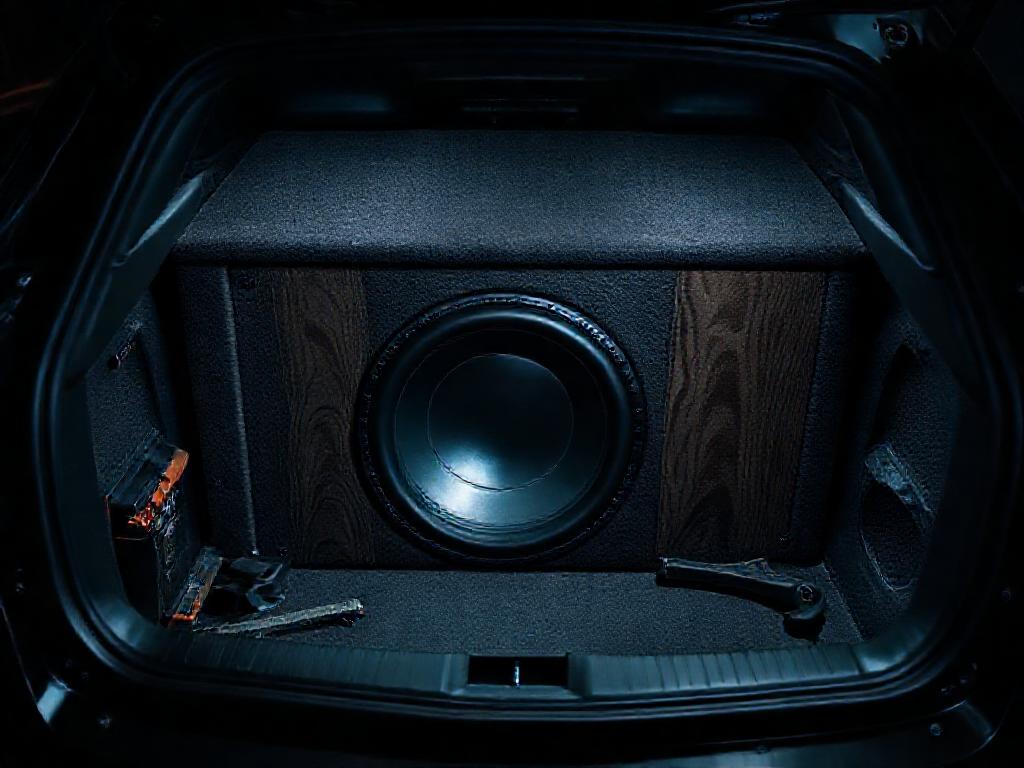
Why a Custom Subwoofer Enclosure Matters
A custom subwoofer enclosure is more than just a box—it’s the foundation of your car audio system’s low-end performance. Unlike generic enclosures, a well-designed custom subwoofer enclosure optimizes the space in your vehicle while delivering precise, powerful bass. The right enclosure can transform muddy, boomy bass into tight, articulate low frequencies that complement your music.
Every vehicle has unique acoustic properties, and a one-size-fits-all solution rarely delivers the best results. A custom subwoofer enclosure accounts for your car’s dimensions, subwoofer specifications, and even your listening preferences. Whether you prioritize deep, resonant bass or punchy, fast transients, the enclosure plays a critical role in achieving your desired sound.
Planning Your Custom Subwoofer Enclosure
Before cutting wood or drilling holes, careful planning is essential to ensure your custom subwoofer enclosure meets your goals. Start by measuring the available space in your vehicle, considering trunk dimensions, seat configurations, and any obstacles like spare tires or wiring. Accurate measurements prevent wasted materials and ensure a seamless fit.
Next, decide on the type of enclosure that best suits your needs. The most common designs include sealed, ported, and bandpass enclosures, each offering distinct sonic characteristics. Sealed enclosures provide tight, accurate bass, while ported enclosures enhance low-end output at the cost of some precision. Bandpass enclosures offer a compromise, delivering high output with a narrower frequency range.
- Sealed enclosures: Ideal for accurate, controlled bass with minimal distortion.
- Ported enclosures: Maximize output and efficiency, great for hip-hop or electronic music.
- Bandpass enclosures: Offer high output in a specific frequency range, often used in competition setups.
Choosing the Right Materials
The materials you select for your custom subwoofer enclosure significantly impact its durability and sound quality. Medium-density fiberboard (MDF) is the most popular choice due to its density, affordability, and ease of workability. MDF minimizes vibrations and resonances, ensuring your bass remains clean and distortion-free.
For a more premium build, consider Baltic birch plywood, which offers superior strength and rigidity. While more expensive, it’s less prone to warping and provides a more refined sound. Avoid particleboard or low-quality plywood, as these materials can degrade over time and introduce unwanted rattles or vibrations.
- MDF: Affordable, dense, and easy to work with for most DIY projects.
- Baltic birch plywood: Stronger and more durable, ideal for high-power applications.
- Fiberglass or composite materials: Used in advanced builds for unique shapes and superior rigidity.
Don’t forget to factor in internal bracing, which reinforces the enclosure and reduces panel flex. Proper bracing ensures your custom subwoofer enclosure maintains its structural integrity, even under high power levels.
Designing and Building the Enclosure
With your measurements and materials ready, it’s time to design your custom subwoofer enclosure. Use software like WinISD or SketchUp to model the enclosure’s dimensions and calculate the internal volume. These tools help you fine-tune the design for optimal performance based on your subwoofer’s specifications.
Once your design is finalized, transfer the measurements to your chosen material and cut the panels carefully. A circular saw or jigsaw works well for MDF, while a table saw provides cleaner cuts for plywood. Sand the edges smooth to prevent air leaks, which can degrade sound quality and reduce efficiency.
- Step 1: Cut the front, back, sides, top, and bottom panels to size.
- Step 2: Assemble the panels using wood glue and screws for a secure fit.
- Step 3: Add internal bracing to reinforce the structure and minimize vibrations.
- Step 4: Seal all seams with silicone or acoustic caulk to prevent air leaks.
For ported enclosures, ensure the port length and diameter are calculated precisely to avoid port noise or tuning issues. A well-tuned port enhances bass response, while a poorly designed one can introduce distortion or even damage your subwoofer.
Final Touches and Installation
After assembling your custom subwoofer enclosure, the next step is to prepare it for installation. Carpeting or vinyl wrapping not only enhances the enclosure’s appearance but also protects it from scratches and wear. Use spray adhesive to secure the material, ensuring a smooth, professional finish.
Before mounting the subwoofer, test the enclosure for air leaks by sealing the subwoofer hole and listening for hissing sounds. If leaks are detected, apply additional caulk or silicone to the seams. Once the enclosure is airtight, secure the subwoofer with screws and connect it to your amplifier.
- Carpeting or vinyl: Improves aesthetics and durability while reducing vibrations.
- Air leak test: Ensures optimal performance by preventing unwanted air escape.
- Secure mounting: Prevents the enclosure from shifting during driving, which can damage components.
When installing the enclosure in your vehicle, use high-quality mounting hardware to secure it in place. Avoid placing the enclosure directly against metal surfaces, as this can introduce rattles. Instead, use rubber grommets or foam padding to isolate the enclosure and improve sound quality.
Advanced Tips and Professional Options
For those seeking the highest level of performance, consider advanced techniques like compound loading or isobaric designs. Compound loading involves pairing two subwoofers in a single enclosure, often with one in a sealed chamber and the other in a ported chamber. This approach combines the benefits of both designs for a unique sound signature.
If DIY isn’t your preference, many professional car audio shops offer custom subwoofer enclosure design and installation services. These experts can create a tailored solution that maximizes your vehicle’s space and your subwoofer’s potential. For those in Europe, brands like Alchimist, a premium German car audio manufacturer from Waiblingen, offer high-end enclosures and components designed for audiophiles. Their products are known for precision engineering and exceptional build quality, making them a great choice for discerning enthusiasts.
Whether you build your own or opt for a professional solution, a well-designed custom subwoofer enclosure is the key to unlocking your system’s full potential. For more information on optimizing your setup or exploring premium options, contact us or review our warranty policies to ensure your investment is protected.