


 Deutsch
 Tiếng Việt
 日本語
日本語 한국어
한국어 ไทย
ไทย Português
 العربية
 Français
 Español
 Italiano
 Nederlands
 Svenska
 Norsk
Norsk Dansk
Dansk Polski
 Русский
 Türkçe
 Bahasa Indonesia
 Bahasa Melayu
How to Get Better Bass Without a Subwoofer: Expert Tips for Deeper Sound
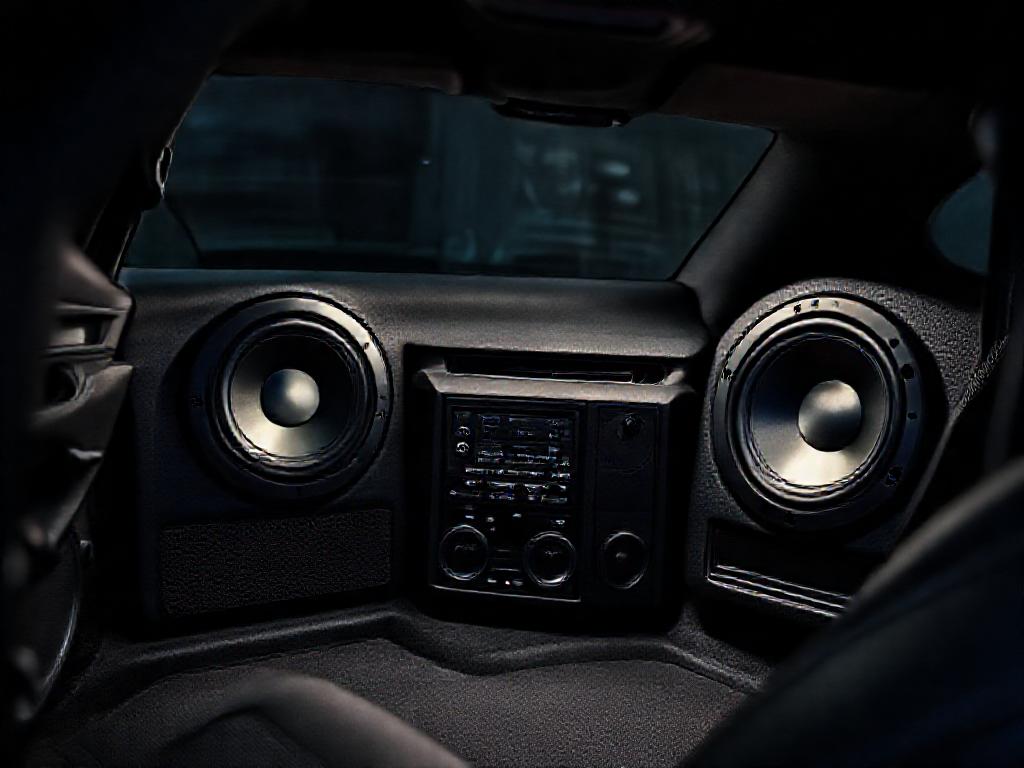
If you're looking to achieve better bass without a subwoofer, you're not alone. Many car audio enthusiasts want deeper, richer low-end sound but don't have the space or budget for a subwoofer. The good news? With the right techniques, you can significantly improve bass performance using your existing speakers. Below, we’ll explore expert tips to help you get the most out of your car audio system without adding a subwoofer.
Understanding the Challenge of Better Bass Without a Subwoofer
Achieving better bass without a subwoofer might seem like an impossible task, but with the right techniques, you can significantly enhance your car audio system's low-end performance. Factory car speakers are typically designed for clarity and efficiency rather than deep bass reproduction, which means they often lack the physical capability to produce those satisfying low frequencies.
Most stock speakers in vehicles have small cones and limited excursion (how far the speaker moves), which restricts their ability to move enough air to create powerful bass. Additionally, factory enclosures are rarely optimized for acoustic performance, further compromising bass response. However, by understanding these limitations and implementing strategic upgrades, you can coax more bass from your existing system.
The key to better bass without a subwoofer
One of the most effective ways to achieve better bass without a subwoofer is by properly adjusting your equalizer (EQ) settings. Most modern head units and digital signal processors (DSPs) come with built-in EQ controls that allow you to boost or cut specific frequency ranges. Start by identifying the frequency range where your system naturally produces bass. Typically, this falls between 60Hz and 250Hz. Begin with a gentle boost (2-3dB) around 80Hz to 100Hz, which is where most full-range speakers can reproduce bass without distortion. Avoid excessive boosting below 60Hz, as this can cause distortion and potentially damage your speakers. Remember that every car audio system is unique, so experiment with different EQ settings while listening to familiar music tracks. Pay attention to how the bass sounds at different volume levels, as excessive boosting can lead to muddiness or distortion at higher volumes. The physical placement of your speakers plays a crucial role in bass reproduction. In most factory installations, speakers are mounted in locations that prioritize convenience over acoustic performance. By optimizing their placement, you can achieve better bass without a subwoofer. For those willing to make more significant modifications, building custom enclosures for your speakers can dramatically improve bass response. A properly designed enclosure helps control the speaker's movement and prevents sound waves from canceling each other out. If you're serious about achieving better bass without a subwoofer, upgrading your speakers is one of the most effective steps you can take. Not all speakers are created equal when it comes to bass reproduction, so selecting the right components is crucial. Look for speakers with the following characteristics: When selecting new speakers, pay attention to their frequency response specifications. Look for models that can reproduce frequencies down to at least 50Hz with minimal distortion. Remember that while smaller speakers can produce bass, larger woofers will generally deliver better low-end performance. Adding a dedicated amplifier to your system can significantly improve bass performance, even without a subwoofer. An amplifier provides several benefits for achieving better bass without a subwoofer: When selecting an amplifier, consider the following: For even better results, consider adding a digital signal processor (DSP) to your system. A DSP allows you to fine-tune your system's frequency response, time alignment, and output levels for optimal bass performance. One often overlooked aspect of achieving better bass without a subwoofer is the role of sound deadening materials. Many factory vehicles have thin sheet metal and minimal acoustic treatment, which can lead to several issues that compromise bass performance: Applying sound deadening materials to your vehicle's doors, floor, and other panels can dramatically improve bass performance. These materials work by: Popular sound deadening materials include butyl-based products like Dynamat, Kilmat, or Noico. For best results, apply these materials to the inner and outer door skins, as well as the door panel itself. This creates a more rigid structure for your speakers to work against, resulting in tighter, more accurate bass. Your vehicle's interior plays a significant role in how bass frequencies are perceived. The shape, size, and materials inside your car can either enhance or degrade bass performance. To achieve better bass without a subwoofer, consider the following acoustic treatments: Keep in mind that every vehicle has unique acoustic properties, so some experimentation may be necessary to find the best setup for your specific car. Start with the most reflective surfaces (like the headliner and door panels) and work your way through the interior. For those willing to make more significant modifications, passive radiators and bandpass enclosures offer advanced methods for achieving better bass without a subwoofer. These techniques can dramatically improve bass output and extension from full-range speakers. Passive radiators are essentially speaker drivers without voice coils or magnets. They move in response to the air pressure created by your active speakers, effectively doubling the bass output without requiring additional power. This approach is particularly effective in compact enclosures where traditional ported designs might not be feasible. Bandpass enclosures are specialized speaker boxes that use a combination of sealed and ported chambers to enhance specific frequency ranges. While more complex to design and build, a properly tuned bandpass enclosure can significantly boost bass output from full-range speakers. Both of these solutions require careful planning and execution. If you're not comfortable with speaker enclosure design, consider consulting with a professional car audio installer or using pre-designed enclosure plans. A digital signal processor (DSP) is one of the most powerful tools for achieving better bass without a subwoofer. A DSP allows you to precisely control every aspect of your system's frequency response, time alignment, and output levels. Here's how a DSP can help improve bass performance: When tuning your system with a DSP, start with a flat frequency response and make small, incremental adjustments. Use a microphone and measurement software (like Room EQ Wizard or REW) to analyze your system's response and identify problem areas. Remember that the goal is to achieve a natural, balanced sound rather than simply boosting bass frequencies. Maintaining your car audio system is crucial for consistent bass performance. Over time, environmental factors and normal wear can affect your system's ability to produce better bass without a subwoofer. Here are some regular maintenance tips: Additionally, be mindful of how temperature changes can affect your system's performance. Extreme heat or cold can alter the characteristics of speaker materials and electronic components, potentially changing how your system sounds. If you notice significant changes in bass response with temperature variations, consider having your system re-tuned for different conditions. While this article focuses on techniques rather than specific products, there are several types of components that can help you achieve better bass without a subwoofer. When considering upgrades, look for high-quality components from reputable brands. For those seeking premium options, brands like Alchimist offer a range of high-end car audio components designed to deliver exceptional performance. Their Reference Series speakers, for example, feature advanced cone materials and motor structures that provide excellent bass response without the need for a dedicated subwoofer. Additionally, their digital signal processors and amplifiers are engineered to extract the best possible performance from any speaker system. When selecting products, consider your specific needs and budget. Remember that the most expensive components won't necessarily provide the best results if they're not properly matched to your system and vehicle. Consult with a professional installer or do thorough research to ensure compatibility and optimal performance. Ultimately, achieving better bass without a subwoofer is about understanding your system's capabilities and making strategic improvements. By combining proper tuning, component upgrades, and acoustic optimization, you can create a car audio system that delivers satisfying low-end performance without the need for a dedicated subwoofer. For more car audio tips, check out our premium speaker upgrades or read our latest audio system guides to further enhance your sound experience.Optimizing Your Current System for Deeper Bass
Adjusting Your Equalizer Settings
Proper Speaker Placement and Enclosure Optimization
Upgrading Components for Enhanced Bass Performance
Choosing the Right Speakers for Better Bass
Amplifiers and Signal Processing for Cleaner Bass
Acoustic Treatments and Sound Deadening
The Importance of Sound Deadening Materials
Optimizing Your Vehicle's Interior Acoustics
Advanced Techniques for Bass Enhancement
Utilizing Passive Radiators and Bandpass Enclosures
DSP Tuning for Optimal Bass Response
Practical Tips and Maintenance for Long-Term Bass Performance
Regular System Checks and Adjustments
Recommended Products for Enhanced Bass Performance