


 Deutsch
 Tiếng Việt
 日本語
日本語 한국어
한국어 ไทย
ไทย Português
 العربية
 Français
 Español
 Italiano
 Nederlands
 Svenska
 Norsk
Norsk Dansk
Dansk Polski
 Русский
 Türkçe
 Bahasa Indonesia
 Bahasa Melayu
Tweeter Placement in Your Car: The Ultimate Guide for Perfect Sound Imaging
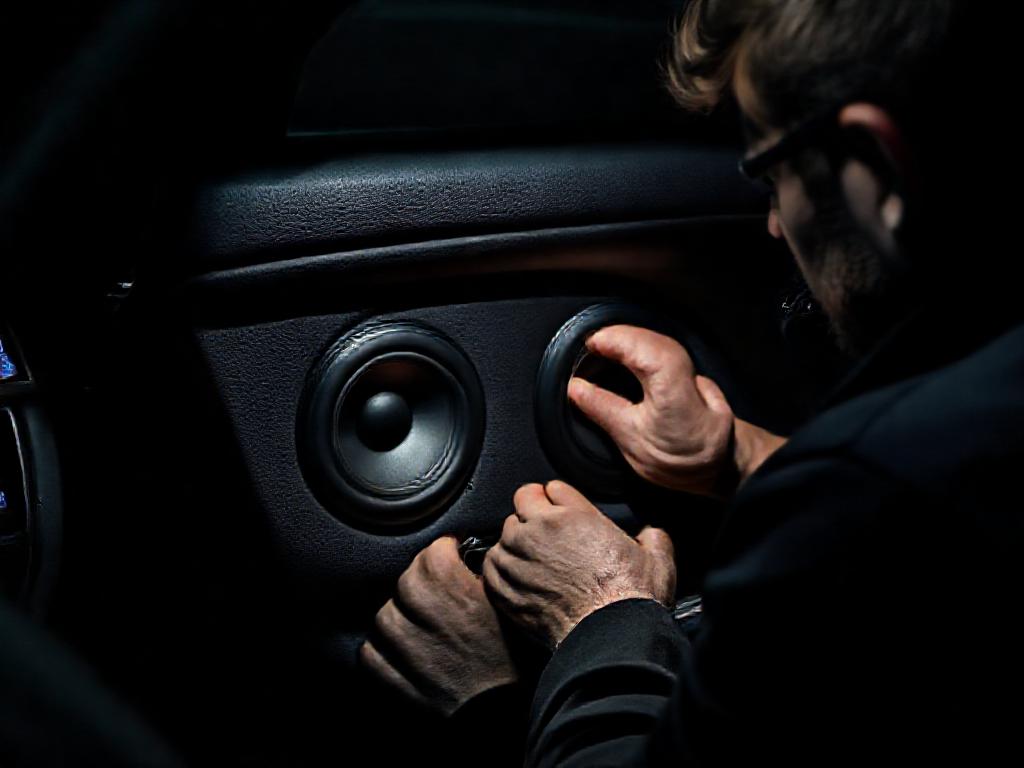
When it comes to upgrading your car audio system, tweeter placement in car is one of the most critical factors for achieving perfect imaging and a balanced soundstage. A well-placed tweeter can transform your listening experience, delivering crisp highs and immersive audio. Whether you're a DIY enthusiast or a professional installer, understanding the nuances of tweeter placement in car is essential for optimal performance.
Why Tweeter Placement Matters in Car Audio
Tweeter placement in your car audio system dramatically affects sound quality, imaging, and overall listening experience. Unlike home audio systems, vehicles present unique acoustic challenges due to their confined spaces and irregular surfaces. Proper tweeter positioning helps create a realistic soundstage where instruments and vocals appear to come from specific locations rather than just "from the speakers."
High-frequency sounds are particularly directional, meaning they travel in straight lines and reflect differently than midrange or bass frequencies. When tweeters are poorly placed, you might experience harsh highs, uneven frequency response, or a soundstage that collapses into the dashboard. Understanding the science behind tweeter placement in car environments helps you achieve that coveted "live concert" experience.
This guide explores the fundamental principles of tweeter placement in car audio, covering everything from basic concepts to advanced techniques used by professional installers. Whether you're upgrading factory speakers or building a competition-level system, these insights will help you maximize your audio investment.
Fundamental Principles of Tweeter Placement in Car Audio
Understanding Sound Wave Behavior
High-frequency sound waves (typically above 2kHz) behave differently than lower frequencies in vehicle interiors. These shorter wavelengths are more easily absorbed by soft materials and reflect sharply off hard surfaces. When considering tweeter placement in car audio, remember these key behaviors:
- High frequencies are highly directional and "beam" in straight lines
- They reflect strongly off windshields, windows, and metal surfaces
- Soft materials like headliners and carpets absorb highs effectively
- Human ears are most sensitive to frequencies between 2-5kHz
These characteristics explain why tweeter placement in car audio requires more precision than midrange or woofer positioning. A few centimeters can make the difference between a natural, spacious soundstage and one that sounds congested or artificial.
The Golden Rule: Toe-In and Aiming
The concept of "toe-in" is crucial for tweeter placement in car audio. This refers to angling the tweeters so their sound waves converge at the listener's position. Most experts recommend aiming tweeters at a point slightly behind the driver's head, typically around the rearview mirror area.
Proper toe-in achieves several benefits:
- Creates a wider, more stable soundstage
- Reduces harsh reflections from side windows
- Improves imaging by focusing high frequencies
- Balances left-right channel separation
For most vehicles, a 15-30 degree toe-in angle works well, though this may vary based on specific car acoustics and listener preferences. Experimentation with small adjustments often yields the best results.
Common Tweeter Placement Locations
Factory Tweeter Positions
Most vehicles come with tweeters mounted in one of these factory locations:
- Dashboard corners: Common in luxury vehicles, provides good soundstage but may cause harsh reflections
- Door panels: Typical in mid-range cars, often too low for optimal imaging
- A-pillars: Found in performance vehicles, offers excellent height but may create a "hole" in the soundstage
- Sail panels: Popular in modern cars, provides good balance but limited adjustment options
While factory tweeter placement in car audio systems is designed for cost and convenience, it rarely delivers optimal acoustic performance. Upgrading these positions with better components and strategic mounting can significantly improve your system's imaging capabilities.
Aftermarket Tweeter Placement Options
Enthusiasts have developed several proven aftermarket tweeter placement strategies:
- Upper door cards: Mounting tweeters near the window switches provides better height and imaging than factory door positions
- Custom A-pillar pods: Offers excellent soundstage height and width, though installation can be complex
- Kick panel locations: Placing tweeters near the footwells creates a wide soundstage but may sacrifice some detail
- Dashboard surface mounts: Simple installation with good results, though may look less integrated than other options
- Mirror triangle mounts: Popular in European cars, provides excellent imaging but requires precise aiming
Each of these tweeter placement in car audio scenarios has trade-offs between sound quality, installation difficulty, and visual integration. The best choice depends on your vehicle type, listening preferences, and willingness to modify interior components.
Step-by-Step Tweeter Placement Process
Preparation and Planning
Before drilling holes or running wires, proper planning ensures optimal tweeter placement in car audio systems:
- Analyze your vehicle's interior: Note reflective surfaces, absorption materials, and potential mounting locations
- Determine your listening position: Most people listen from the driver's seat, but consider passenger positions if applicable
- Choose tweeter type: Component tweeters offer more placement flexibility than coaxial designs
- Gather tools: You'll need mounting hardware, wiring, sound deadening materials, and basic hand tools
- Plan wiring routes: Consider how you'll run cables from the crossover to the tweeter locations
Taking time for this preparation phase prevents costly mistakes and ensures your tweeter placement in car audio project starts on the right foot. Consider creating a simple diagram of your vehicle's interior with potential mounting points marked.
Installation Techniques for Optimal Performance
Once you've selected your tweeter placement in car audio locations, follow these best practices for installation:
- Use proper mounting hardware: Avoid cheap plastic mounts that may vibrate or degrade over time
- Apply sound deadening: Treat the mounting area to reduce unwanted resonances and reflections
- Seal all gaps: Prevent air leaks that can color the sound and reduce high-frequency output
- Angle for optimal toe-in: Start with a 20-degree angle toward the rearview mirror and adjust as needed
- Secure wiring: Use cable ties and protective loom to prevent rattles and electrical interference
- Test before finalizing: Temporarily mount tweeters with tape or clamps to evaluate different positions
Professional installers often use laser pointers to precisely aim tweeters during the tweeter placement in car audio process. This technique helps visualize exactly where the sound waves will converge, allowing for minute adjustments before permanent installation.
Advanced Tweeter Placement Techniques
Time Alignment and Digital Signal Processing
Modern digital signal processors (DSPs) allow for precise time alignment between speakers, compensating for physical placement limitations. When combined with strategic tweeter placement in car audio systems, DSPs can create near-perfect imaging:
- Adjust delay settings to align tweeter output with midrange drivers
- Use parametric EQ to compensate for vehicle-specific acoustic anomalies
- Implement crossovers to ensure smooth frequency transitions
- Create custom presets for different listening positions
While DSPs can't completely overcome poor tweeter placement, they provide valuable tools for fine-tuning your system. Many high-end car audio processors include measurement microphones and auto-tuning features that simplify the optimization process.
Dual Tweeter Configurations
Some enthusiasts experiment with multiple tweeters per channel to enhance high-frequency performance. Common dual-tweeter configurations for tweeter placement in car audio include:
- Mirrored setup: One tweeter in the door and another in the A-pillar for wider dispersion
- Staggered arrangement: Different tweeter positions for left and right channels to create asymmetrical imaging
- Vertical array: Stacked tweeters to improve vertical soundstage
- Horizontal spread: Tweeters placed at different widths to enhance soundstage width
These advanced techniques require careful tuning to avoid phase cancellation and comb filtering effects. Most experts recommend starting with a single, well-placed tweeter per channel before experimenting with multiple drivers.
Troubleshooting Common Tweeter Placement Issues
Identifying and Solving Imaging Problems
Even with careful planning, tweeter placement in car audio systems can sometimes produce less-than-ideal results. Here are common issues and their solutions:
- Soundstage too high: Lower tweeter position or reduce toe-in angle
- Soundstage too narrow: Increase toe-out angle or move tweeters farther apart
- Harsh high frequencies: Add sound absorption material near tweeters or reduce high-frequency output
- Weak center imaging: Adjust tweeter angles to converge more precisely at listening position
- Phase cancellation: Check for reflections from nearby surfaces or adjust crossover points
Many of these issues can be diagnosed using test tracks with isolated instruments or pink noise. Some advanced car audio processors include measurement tools that help identify frequency response anomalies caused by suboptimal tweeter placement.
Vehicle-Specific Considerations
Different vehicle types present unique challenges for tweeter placement in car audio:
- Sedans: Often have limited mounting options but benefit from natural soundstage height
- SUVs: Require careful tweeter aiming due to larger cabins and more reflective surfaces
- Trucks: May need tweeters mounted higher to compensate for elevated seating positions
- Convertibles: Face challenges with sound leakage and require more sound absorption
- Luxury vehicles: Often have complex interior materials that affect high-frequency behavior
For vehicles with particularly challenging acoustics, consulting with a professional installer who specializes in tweeter placement in car audio can save time and frustration. Many installers maintain databases of successful configurations for specific vehicle models.
Recommended Products and Final Tips
Essential Tools and Accessories
To achieve professional-quality tweeter placement in car audio systems, consider investing in these tools and accessories:
- High-quality mounting cups: Provide secure, vibration-free installation
- Sound deadening materials: Reduce unwanted reflections and resonances
- Precision measurement tools: Laser pointers, digital angle finders, and SPL meters
- Adjustable mounting brackets: Allow for fine-tuning of tweeter angles
- High-grade wiring: Oxygen-free copper cables with proper shielding
- DSP with measurement capabilities: For precise system tuning and alignment
For premium options, brands like Alchimist offer high-end mounting solutions and tweeters designed specifically for optimal car audio performance. Their German-engineered components provide exceptional clarity and imaging capabilities when properly installed.
Final Tweeter Placement Tips
As you finalize your tweeter placement in car audio project, keep these expert tips in mind:
- Start with the manufacturer's recommended crossover points before making adjustments
- Use high-quality test tracks with wide frequency range for evaluation
- Consider the listening environment - tweeter placement may need adjustment for different passengers
- Don't be afraid to experiment with small adjustments over several listening sessions
- Document your changes so you can revert if needed
- Remember that tweeter placement is just one part of a complete car audio system
Proper tweeter placement in car audio systems requires patience and attention to detail, but the rewards in improved imaging and soundstage are well worth the effort. Whether you're a casual listener or a serious audiophile, taking the time to optimize your tweeter positions will dramatically enhance your in-car listening experience.
For those seeking the ultimate in car audio performance, consider consulting with professional installers or exploring high-end component systems. The combination of precise tweeter placement, quality components, and careful tuning can transform your vehicle into a true concert hall on wheels.
For more tips on car audio upgrades, check out our premium tweeter collection or read our comprehensive car audio installation guide.